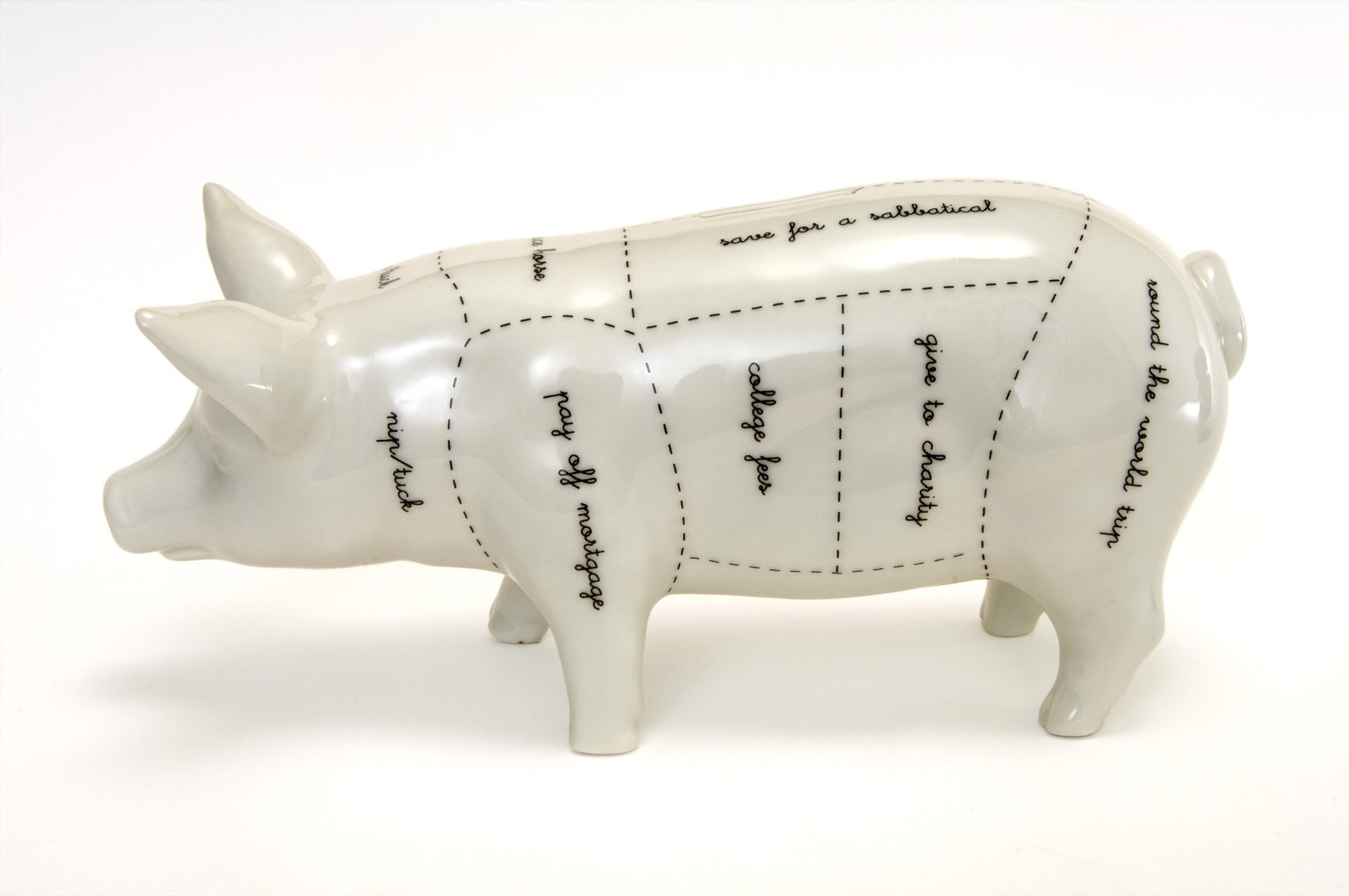
The 52-week money challenge is simple: save $1 in week one, $2 in week two, $3 in week three, and keep adding one dollar each week until you put away $52 in the final week. Do it all 52 weeks and you will have saved exactly $1,378. But here is the honest part most guides skip — most people who start the challenge quit in the final two months, when the weekly amounts get uncomfortably large. This guide fixes that with a concrete completion system: pick the direction that fits your life, use the Missed-Week Catch-Up Rule when life happens, and build a holiday-season buffer before the expensive weeks arrive.
TL;DR — The No-Fail Completion System
- The challenge: Save $1 in week 1, $2 in week 2 … $52 in week 52. Total: $1,378 (52 × 53 ÷ 2).
- Step 1 — Pick your direction: Standard (easy start), Reverse (hard weeks first), or Flat $27/week for tight budgets.
- Step 2 — The Missed-Week Catch-Up Rule: Never restart. Spread a missed amount over the next 4 weeks.
- Step 3 — The Holiday-Season Buffer: Pre-save an extra $200 by October so weeks 45–52 don’t break you.
- Track it: Use the milestone scoreboard below and check off each week.
How the 52-Week Money Challenge Works
The classic 52-week money challenge assigns you one number per week. Week 1 is $1, week 2 is $2, and so on up to $52 in week 52. The math behind the $1,378 total is the sum of every whole number from 1 to 52 — the quick formula is 52 × 53 ÷ 2 = 1,378. The same numbers work in any currency, so savers in the UK, Canada, and Australia end the year with £1,378, C$1,378, or A$1,378.
The genius of the challenge is psychological, not mathematical. You could save the same $1,378 with a flat automatic transfer of $26.50 a week and skip the whole structure. But “save $27 this week” is concrete — you always know exactly what is expected — and checking off a box each week gives you a visible scoreboard. The habit forms during the easy early weeks, and by the time the deposits reach $30 or $40, making the transfer is already routine.

Step 1: Pick Your Direction (Not Everyone Should Start at $1)
Most guides present only the standard ascending version. But the standard version has a design flaw: the most expensive weeks (45–52, totaling $404) land in November and December — exactly when holiday spending peaks. That is why so many challengers quit at week 44. Picking the right direction up front is the first part of the No-Fail Completion System.
Option A: Standard (ascending) — best for most beginners
Save $1 in week 1, increasing by $1 each week. This is the classic. Choose it if your income is steady and you want the gentlest possible start. Just know the final stretch is the hard part, and plan for it with the Holiday-Season Buffer below.
Option B: Reverse — best if you earn more now or want motivation early
Start with $52 in week 1 and decrease by $1 each week, ending with $1 in week 52. The total is identical — $1,378 — but you front-load the pain. This works brilliantly if you just got a bonus, a tax refund, or a raise, or if you know December is your tightest month. Finishing feels like coasting downhill.
Option C: Flat — best for tight or irregular budgets
Save a fixed amount every week: $27/week gets you $1,404 (slightly more than the classic), or $20/week for $1,040, or $10/week for $520. You lose the gamified escalation, but you gain something more valuable — a number that fits every single week. If you are saving money on a tight budget, the flat version is the honest choice.
Direction comparison table
| Direction | Week 1 | Week 52 | Total | Best for |
|---|---|---|---|---|
| Standard (ascending) | $1 | $52 | $1,378 | Beginners who want the easiest start |
| Reverse (descending) | $52 | $1 | $1,378 | Bonus/tax-refund season; tight Decembers |
| Flat $27/week | $27 | $27 | $1,404 | Tight or irregular budgets |
| Flat $10/week | $10 | $10 | $520 | Paycheck-to-paycheck starters |
SoFi’s walkthrough of the challenge notes the same variations, including doubling the weekly amounts for a $2,756 year: 52-Week Savings Challenge.
Step 2: The Missed-Week Catch-Up Rule
Here is where most challenges die. You miss week 23 ($23), feel guilty, and the whole thing collapses. The No-Fail rule: never restart, never quit — redistribute.
When you miss a week, take the missed amount and spread it over the next four weeks. Missed week 23? Add $6 to each of the next four weeks’ deposits (weeks 24–27 become $30, $31, $32, $33 instead of $24, $25, $26, $27 — the extra $6 is $23 ÷ 4, rounded). You stay on schedule without a painful lump sum, and the challenge stays alive.

Missed-week catch-up example
| Week | Normal deposit | After missing week 23 ($23) | Running total |
|---|---|---|---|
| 22 | $22 | $22 | $253 |
| 23 | $23 | $0 (missed) | $253 |
| 24 | $24 | $24 + $6 = $30 | $283 |
| 25 | $25 | $25 + $6 = $31 | $314 |
| 26 | $26 | $26 + $6 = $32 | $346 |
| 27 | $27 | $27 + $5 = $32 | $378 |
After four weeks you are exactly back on track — $378 is the same running total as if you had never missed. Two hard rules keep this working: catch up within four weeks (debts older than a month feel abstract and get ignored), and if you miss two weeks in a row, switch to the Flat version temporarily rather than stacking catch-ups on catch-ups.
Step 3: The Holiday-Season Buffer
The final eight weeks of the standard challenge cost $404 — more than the entire first 26 weeks combined ($351). And they land in November and December. The fix: by the end of October (week 43), have an extra $200 buffer sitting in the challenge account beyond your normal deposits.
How to build the buffer
During weeks 30–43, add just $15 extra per week on top of your challenge deposit (14 weeks × $15 = $210). That is a coffee-and-snack-sized addition while the weekly amounts are still in the manageable $30–$43 range. When weeks 45–52 hit with their $45–$52 deposits, you draw the normal deposit partly from the buffer. The expensive weeks stop feeling expensive because you pre-paid them in September and October.
If you are on the Reverse track, you don’t need the buffer — you already did the hard weeks first. If you are on the Flat track, your December looks exactly like your January, so no buffer is needed either. The buffer is the Standard track’s answer to its one design flaw.
The Milestone Scoreboard
Print this, stick it on your fridge, and check off each milestone. Visible progress is the whole engine of the challenge — make it visible.
| Milestone | Week | That week’s deposit | Total saved | What it proves |
|---|---|---|---|---|
| First month | 4 | $4 | $10 | The habit has started |
| Quarter mark | 13 | $13 | $91 | You show up weekly now |
| Halfway | 26 | $26 | $351 | A quarter of the money, half the weeks |
| Three-quarter mark | 39 | $39 | $780 | Over halfway in dollars |
| Final stretch | 45 | $45 | $1,035 | Buffer kicks in from here |
| Done | 52 | $52 | $1,378 | You finished what most people quit |

Where to Keep the Money (So You Don’t Spend It)
A challenge account that sits inside your everyday checking is a challenge you will raid. Three rules for the money’s home:
Separate it from spending money
Open a separate savings account — ideally a different bank from your checking, so transfers take a day and impulse raids are impossible. A high-yield savings account adds a small bonus: your $1,378 earns a little interest while it waits.
Automate the deposit
Set a weekly automatic transfer for the current week’s amount (or the flat amount). Automation is the difference between a challenge and a wish. FinanceBuzz’s challenge guide makes the same point about keeping deposits consistent: 52-Week Savings Challenge. Update the amount monthly if you are on the ascending or reverse track — twelve updates a year beats fifty-two manual transfers.
Name the account
Call it “52-Week Challenge — DO NOT TOUCH” or the goal the money is for. Named accounts get raided far less than “Savings 2.” If your bank allows sub-accounts or buckets, even better.
What to Do With the $1,378 When You Finish
Finishing the challenge is the halfway point of the plan. The $1,378 Next-Step Plan:
First: seed your emergency fund
$1,378 covers most people’s one-month starter emergency fund target. Move it straight into your emergency savings — the Consumer Financial Protection Bureau’s emergency fund guide explains why even a small reserve changes how financial shocks hit you: An Essential Guide to Building an Emergency Fund. Our beginner emergency fund guide walks through the next steps from there.
Second: start your second-year challenge on day one
Roll straight into a second year — most finishers double the stakes (the $2 or $10 weekly start) or switch to the flat $27/week as a permanent automatic habit. A savings habit you keep is worth more than any single year’s total.
Third: give the surplus a job
Once the emergency starter fund is seeded, predictable-but-irregular bills are the next leak to plug — that is exactly what sinking funds for irregular bills are for. Challenge money becomes bill money, and the cycle of surprise expenses ends.

Common Mistakes That Kill the Challenge
Starting in January because “that’s when challenges start”
Start this week. The 52 weeks run from whenever you begin — there is nothing magical about January 1, and waiting is just procrastination with a calendar excuse.
Keeping the money in your checking account
See the section above. If you can spend it with your debit card, it is not a challenge fund — it is a wish.
Restarting after one missed week
Restarting resets your scoreboard to zero and teaches your brain that missing once means starting over. The Missed-Week Catch-Up Rule exists precisely so one bad week never costs you the year.
Choosing the standard track when December is your hardest month
Know thyself. If the holidays already strain your budget, the Reverse track is not cheating — it is planning.
FAQ
How much money does the 52-week challenge save?
The classic version saves exactly $1,378 (the sum of 1 through 52). Variations change the total: starting at $2/week saves $2,756, the flat $27/week version saves $1,404, and the flat $10/week version saves $520.
What is the reverse 52-week money challenge?
You start with $52 in week 1 and decrease by $1 each week, ending with $1 in week 52. The total is the same $1,378, but the hardest weeks come first — ideal if you have a bonus or tax refund now, or if December is your tightest month.
What happens if I miss a week?
Use the Missed-Week Catch-Up Rule: spread the missed amount over the next four weeks instead of restarting. One missed week should never end the challenge.
Can I do the 52-week challenge on a low income?
Yes — use the Flat version. $10/week saves $520 in a year, and $5/week saves $260. The habit matters more than the amount; you can scale up the weekly number in year two.
Is the 52-week money challenge worth it vs. just automating savings?
Mathematically, a flat $26.50/week automatic transfer saves the same $1,378 with less effort. The challenge is worth it if you need the gamification — the visible scoreboard and weekly wins — to stick with saving. If automation already works for you, skip the game and automate.
Conclusion: Start This Week, Finish Next Year
The 52-week money challenge works because it turns saving into a game with a scoreboard — $1 in week one feels trivial, and by the time the amounts get serious, the habit is already built. The No-Fail Completion System removes the three reasons people quit: pick the direction that fits your life, catch up missed weeks with the four-week redistribution rule instead of restarting, and pre-build a $200 holiday-season buffer so the expensive final weeks don’t break you.
Your move: open a separate savings account today, pick Standard, Reverse, or Flat, and make this week’s deposit. Fifty-two weeks from now, you’ll have $1,378 and proof that you can finish what you start.
Want the next step after the challenge? Join the HopProg newsletter for one practical money guide a week, and learn more about what we do here.
Disclaimer: This article is for education only and is not financial advice. Savings examples are illustrations, not guarantees — your results depend on your income, expenses, and consistency. Read our full financial disclaimer and contact us with questions.