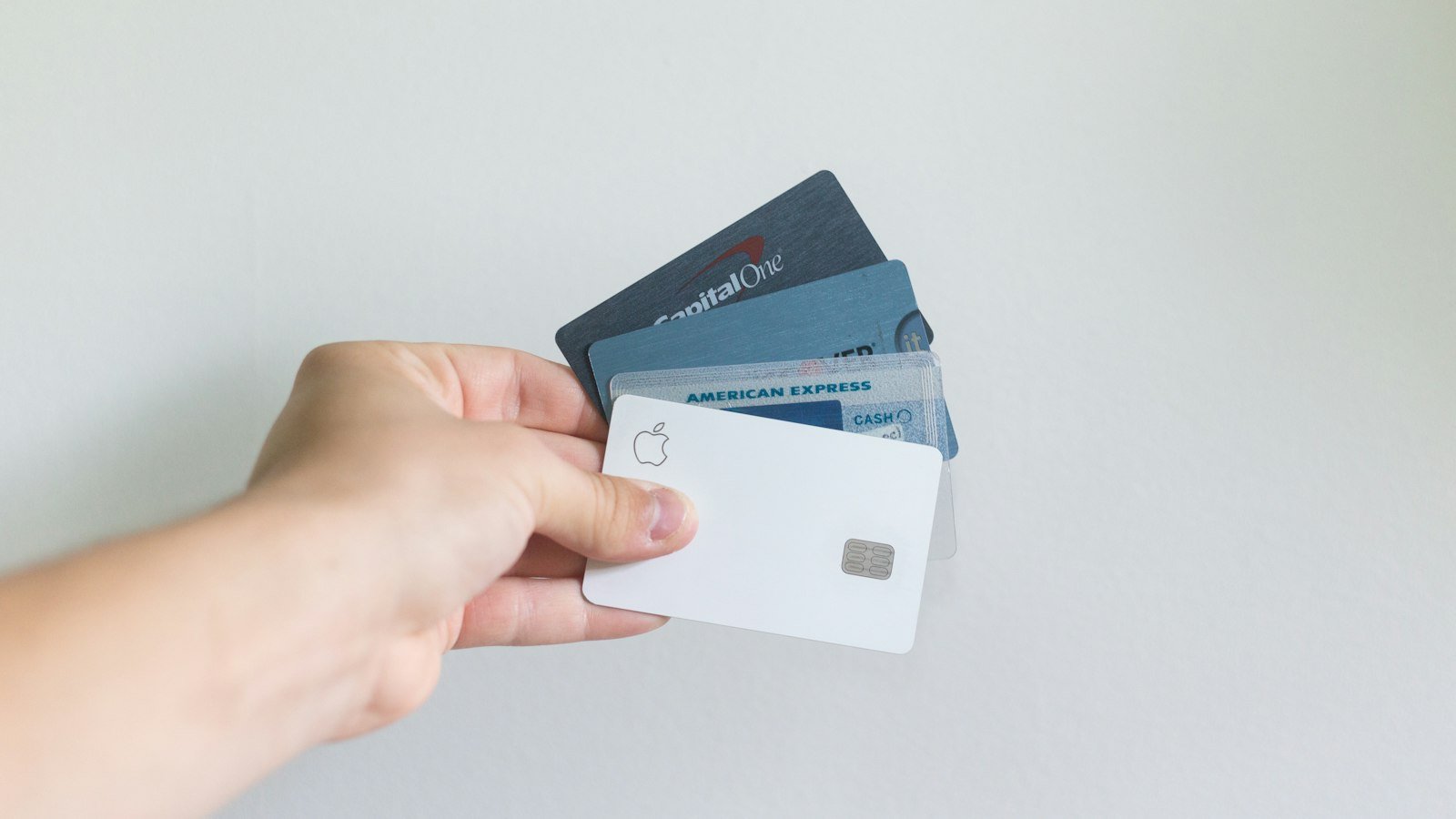
You are standing at a checkout — card terminal blinking — and the same question pops up every single time: credit or debit? Here is the short answer: use your credit card for online shopping, travel bookings, hotel holds, and any purchase where fraud protection matters — but only if you pay the full balance every month. Use your debit card for ATM cash, everyday spending when you are on a tight budget, and anytime you have carried a balance. The rest of this guide gives you the 6-Second Swipe Rule: a three-question framework that tells you exactly which card to reach for, in the time it takes the terminal to beep.
TL;DR — The 6-Second Swipe Rule
- Question 1 (the credit gate): “Will I pay this in full this month?” If the honest answer is no, reach for debit — interest kills every reward.
- Question 2 (the fraud ladder): “Could my card details be stolen here?” Online, travel, and big purchases go on credit, where the bank’s money — not yours — is on the line.
- Question 3 (the card’s job): “What does this purchase need — cash, rewards, or a hold?” ATM cash is always debit; rewards and hotel deposits are always credit.
- The math: 2% cashback on $24,000 of yearly spending is $480 of free money — but one carried $3,000 balance at 24% APR costs you over $700 a year in interest.
- New to cards? Start with the 30-day Debit-First On-Ramp at the end of this guide before you run the full rule.
How the Two Cards Actually Work
The confusion disappears once you see what happens when you tap. A debit card pulls money directly out of your checking account — the cash is gone within seconds, and you can only spend what you have. A credit card spends the bank’s money first and sends you a bill once a month. Pay that bill in full and the loan costs you nothing; the bank even pays you rewards for the privilege. Pay only part of it and the bank charges interest — currently around 22–24% APR on average in the US — which compounds against you from day one.
That single difference explains almost everything. Debit is your money, right now. Credit is borrowed money with a grace period. The rules below just apply that idea to every checkout.

The 6-Second Swipe Rule: Your Decision Framework
Forget memorizing long lists of “use this for that.” Before you tap, insert, or click, ask yourself three questions in order. Six seconds, every time.
Second 1–2: The Credit Gate — “Will I pay this in full this month?”
This is the only question that matters first. If you are already carrying a balance, planning to pay only the minimum, or even slightly unsure you can clear this purchase by the due date — use debit. Interest at 22–24% APR erases years of cashback in weeks. Rewards are a bonus for disciplined payers, never a discount for borrowers. Our guide to using a credit card responsibly covers the pay-in-full habit in detail.
Second 3–4: The Fraud Ladder — “Could my details be stolen here?”
Think of purchases on a fraud-risk ladder. At the top — online stores, travel sites, new merchants, gas station pumps — your card details are most exposed, and credit wins: if a thief strikes, they are spending the bank’s money while you dispute, and your rent money sits untouched. At the bottom — a coffee shop you visit daily, your grocery run — risk is low and either card works. Anything you buy online, over the phone, or from a seller you do not know goes on credit. Every time.
Second 5–6: The Card’s Job — “What does this purchase need?”
Some purchases have a correct answer no matter what:
- Need physical cash? Debit at the ATM — always. A credit card “cash advance” starts charging interest the same day, with no grace period, plus a fee.
- Hotel, rental car, or any deposit? Credit — always. These merchants place a hold that can freeze hundreds of dollars; on debit that is your cash, locked for days.
- Earning rewards on money you would spend anyway? Credit — but only past the credit gate.
- Keeping a tight budget this month? Debit. The hard limit of your account balance is a feature, not a bug.
The complete rule, on one line: pass the credit gate → climb the fraud ladder (credit for risky, either for safe) → check the card’s job (cash = debit, holds and rewards = credit).
The Swipe Matrix: Every Situation, One Answer
Once the rule is in your head, these become automatic. Keep this table bookmarked until then. Capital One’s credit cards vs debit cards explained guide frames the same decision situation by situation.
| Situation | Use | Why |
|---|---|---|
| Online shopping | Credit | Stronger fraud and dispute protection; your bank balance stays untouched |
| Travel bookings (flights, hotels) | Credit | Purchase protection, travel insurance perks, and possible rewards |
| Hotel / rental-car deposits | Credit | Holds freeze funds — on credit it is the bank’s money, not yours |
| Groceries and gas | Either | Credit earns rewards if paid in full; debit keeps spending visible |
| Subscriptions and recurring bills | Credit | Easier to dispute a charge that should have stopped; builds payment history |
| ATM cash | Debit | Credit cash advances carry instant interest plus fees — never worth it |
| Small daily purchases | Either | Low fraud risk either way; debit is simpler, credit earns a few cents back |
| Big-ticket items (electronics, furniture) | Credit | Extended-warranty and purchase-protection perks many cards include |
| Carrying any balance already | Debit | New credit charges pile interest on top of old debt — freeze the card |
| Building your credit history | Credit | Small recurring charges paid in full report on-time payments to the bureaus |
Fraud Protection: Why Credit Wins (and the Exact Numbers)
This is the biggest real-world difference between the two cards, and it comes down to whose money is missing while you fight the fraud.
The two laws that protect you
Credit cards fall under the Fair Credit Billing Act: your liability for unauthorized charges is capped at $50, and most major issuers add a $0-liability policy on top. Crucially, the stolen money was the bank’s — your checking account still has every dollar for rent and groceries while the dispute is investigated.
Debit cards fall under the Electronic Fund Transfer Act, and the protection shrinks the longer you take to report:
- Report within 2 business days: liability capped at $50
- Report within 3–60 days: liability up to $500
- After 60 days: potentially unlimited — every dollar the thief took is gone
What fraud actually feels like on each card
| Credit card fraud | Debit card fraud | |
|---|---|---|
| Whose money is gone? | The bank’s | Yours — straight from checking |
| Can bills bounce meanwhile? | No — your cash is untouched | Yes — until the bank returns it, which can take weeks |
| Max liability (worst case) | $50 (usually $0 with issuer policy) | $50, $500, or unlimited — depends how fast you report |
| Dispute strength | Chargeback rights are strong for non-delivery and not-as-described | Weaker; some banks help, but the law requires less |
The takeaway: use debit where fraud is unlikely (your regular grocery run) and credit everywhere your card number travels (online, travel, new merchants). Experian’s guide on card safety confirms the same recommendation.

The Rewards Math: A Worked Example
Rewards are the reason many beginners rush toward credit cards — so let us run the real numbers instead of guessing.
The upside: $480 a year of free money
Take a beginner who puts $2,000 a month of normal spending on a flat 2%-cashback card with no annual fee and pays the balance in full every month:
- $2,000 × 12 months = $24,000 yearly spend
- $24,000 × 2% = $480 back per year, for changing nothing except which card she swipes
That is real. And it is also the best-case version — it requires perfect pay-in-full discipline.
The downside: one carried balance wipes it out
Now the same beginner carries a $3,000 balance at 24% APR while paying minimums. Roughly $60 a month in interest flows out — over $700 a year — while her 2% cashback keeps trickling in at about $40 a month. She nets negative $220 for the year, before late fees.
| Scenario | Yearly rewards earned | Yearly interest paid | Net result |
|---|---|---|---|
| Pays in full (2% card, $24k spend) | +$480 | $0 | +$480 |
| Carries $3,000 at 24% APR | +$480 | −$720 | −$240 |
| Pays in full (debit only) | $0 | $0 | $0 |
The rule inside the rule: rewards are worth chasing only when the “yearly interest paid” column is $0. If it is not, the winning move is debit until the balance is gone. This is exactly why the credit gate comes first in the 6-Second Swipe Rule.
The 30-Day Debit-First On-Ramp (for Credit Newbies)
If you are nervous about credit cards — or have carried a balance before — do not jump straight into the full Swipe Rule. Run this 30-day on-ramp instead:
- Days 1–7 — Debit for everything. Feel the rhythm of spending money you actually have. Watch your balance after every purchase.
- Day 8 — Put ONE recurring bill on the credit card (a $12 streaming subscription is perfect) and set up autopay for the full statement balance.
- Days 8–30 — Keep swiping debit everywhere else. That one credit charge reports an on-time payment to the bureaus — which is how you build credit from scratch — while your real spending stays safely on debit.
- Day 30 — Review. Was the full balance paid automatically with zero stress? Graduate to the full 6-Second Swipe Rule. Any stress at all? Stay on the on-ramp one more month.
Thirty days of training wheels beats thirty days of 24% interest. This method builds credit history while your budget stays protected by debit’s hard limit.

5 Swipe Mistakes Beginners Make
1. Using debit for online shopping
This is the most expensive habit on the list — not because of fees, but because of exposure. When a data breach hits an online store, debit users wake up to an emptied checking account and a weeks-long fight to get their own money back. Credit users get a new card number and a reversed charge. Online always means credit.
2. Taking a cash advance on a credit card
Credit cards are not ATMs. A cash advance charges a fee (often 3–5% of the amount) and starts accruing interest immediately — there is no grace period. It is the single most expensive way to get cash. Need physical cash? Use your debit card at the ATM, where it is free or nearly free.
3. Letting hotels put holds on your debit card
A $400 “incidentals hold” on debit freezes $400 of your money for days after checkout — money that might have been your grocery budget. The same hold on a credit card touches only your credit line. This one mistake has ruined more vacations than any other.
4. Chasing rewards while carrying a balance
“But I’m earning 5% back on groceries!” — while paying 24% APR on the balance. The math from the table above does not care about your cashback categories. Pause all credit spending until the balance is zero, then restart with the credit gate in place. A starter emergency fund is also what keeps unexpected bills off the credit card in the first place.
5. Treating the credit limit as income
A $5,000 credit limit is not $5,000 you have — it is $5,000 the bank lets you borrow. Beginners who swipe “because the limit is there” end up paying the minimum and watching interest compound. The fix: never charge more in a month than sits in your checking account. Your credit card should mirror your debit card’s reality.
FAQ: Credit Card vs Debit Card
Does a debit card build credit?
No. Debit card activity is never reported to the credit bureaus — it is just your own money moving. To build a credit history you need a credit product: a starter credit card used for small purchases and paid in full monthly is the classic beginner path.
Which is safer to use online: credit or debit?
Credit, by a wide margin. Federal law caps your fraud liability at $50 on credit cards (most issuers reduce it to $0), and the thief’s target was the bank’s money, not your checking account. Debit fraud can drain your actual cash and leave you waiting weeks for it to come back.
Can I use a credit card at an ATM?
Technically yes, but you should not. ATM withdrawals on a credit card count as cash advances: expect a 3–5% fee and interest from day one with no grace period. Debit cards are the correct tool for cash — that is literally what they are for.
Which card is better for budgeting?
Debit, for most beginners. Spending stops when the account is empty, so the budget enforces itself. Credit cards require the discipline of a monthly pay-in-full — excellent once the habit is solid, dangerous before it is.
Should a total beginner even get a credit card?
Yes — eventually. A credit history takes years to build, and starting early helps with future apartment applications and loan rates. But start with the 30-day Debit-First On-Ramp above: one small recurring charge on autopay, everything else on debit, until pay-in-full feels automatic.

The Bottom Line
There is no single winner in the credit card vs debit card debate — there is a right tool for each checkout. Run the 6-Second Swipe Rule: pass the credit gate, climb the fraud ladder, and match the card to the job. Credit handles online shopping, travel, deposits, and rewards; debit handles cash, tight budgets, and any month you are carrying a balance. Get that split right and both cards make you money instead of costing you money.
Want the full beginner system? Subscribe to our newsletter for one practical money lesson a week, and learn more about HopProg and how we teach personal finance.
Disclaimer: This article is for education only and is not financial advice. Card fees, APRs, and rewards figures are typical US examples as of 2026 and will differ by issuer and country — always check your card’s terms. Never borrow money you cannot repay. Read our full financial disclaimer and contact us with questions.